Friday, December 4, 2009

My DNA Fragrance smells fishy

Image of the "M" fragrance that is apparently based on the DNA of Michael Jackson


A collector of strands of hair from famous people has lended some of them to the "My DNA Fragrance" company which extracts mtDNA and then uses that as a way to make mixing decisions for fragrances. They market the fragrances to individuals who can order their own unique personalized fragrance and they sell premixed fragrances based on the celebrity mtDNA.

The perfume contains no DNA or any materials from a human, but has been used in some mysterious way to determine the amounts of each component that goes into a perfume. The website claims to donate some of the proceeds to the charities of the late celebrities, but I just have to imagine they are not authorized to use the likenesses of these dead folks for their own profit. I bet they will battling it out in court with many estate lawyers in the near future.

What is your opinion? Whether the product is cool or not, does it raise some ethical issues? What does M actually smell like?

Company website:
http://mydnafragrance.com

This blog, apparently from the company describes some of the details:
http://mydnafragrance.wordpress.com/2009/11/19/34/


Wednesday, December 2, 2009

Metabolic Materials: Dr. Rachel Armstrong

An artist's depiction of the city of Venice after the implementation of the metabolic materials of Rachel Armstrong. The limestone formations protect the buildings from the sea and new sea life can utilize the architectural formations bringing a new attraction to the city which is sustainable and natural.


Another exciting bit of research involving living, or in this case, semi-living protocells and architecture. Dr. Rachel Armstrong, from the Bartlett School of Architecture, discussed her ideas for buildings that not only repair themselves, but signal a departure from traditional architecture. Her ideas call for architecture that merges with the environment through materials that are alive and become part of the ecological systems in the surroundings. In this way the buildings can be sustainable, beneficial to the inhabitants of cities, and produce opportunities for new encounters with life.

Watch her TED talk here: http://www.ted.com/talks/rachel_armstrong_architecture_that_repairs_itself.html

Monday, November 30, 2009

Buildings in the Desert: Sand and Bacteria

Image taken from the Holcim Foundation website.
Full image available here:
http://www.holcimfoundation.org/Portals/1/images/holcim_imagegallery/A08AMEng12-006f.jpg


Architect Magnus Larsson presented his novel project idea in a Ted talk recently, in which he proposed to halt the expansion of the Saharan desert by using the sand itself. His construction idea involves the use of a bacteria (bacillus pasteurii) which can be used to turn ordinary sand into sandstone.

Read more about the science behind this new bio material:
http://www.sil.ucdavis.edu/projects-bsi.htm

Read more about the architect's projects and ideas on his website:
http://www.magnuslarsson.com/architecture/dune.asp

Thursday, October 8, 2009

Oats + mold = computer!

Plasmabot project photo

As reported in a number of news outlets, researchers from the University of the West of England are building a computational robot based on the growth habits of the hysarum polycephalum mold. Read more at the following links:


Tuesday, May 5, 2009

TAXIDERMY: Ravishing Beasts

One of the many `fraudulent animals' in the gallery: cowbird?


If you haven't run across this site, you need to take a peek. As the site suggests, start in the gallery http://www.ravishingbeasts.com/gallery/ and let yourself be amazed at the beautiful and bizarre examples of taxidermy in contemporary art. From the more standard examples of the jack-a-lope to the cowbird chimera, this website provides contemporary examples of artwork that incorporates the processes and concepts from taxidermy. Aside from the beautiful and shocking visual materials, there are many articles provided that explain the science, processes and aesthetics of the field.

Open to interpretation, but this sculpture somehow captures the beauty of nature even though it is quite unnatural


These photos are linked back to the original webpage www.ravishingbeasts.com
and are the materials and property of the respective owners/caregivers.

Thursday, April 16, 2009

Eduardo Kac's newest Bioart piece lets the artist live in his work, literally!

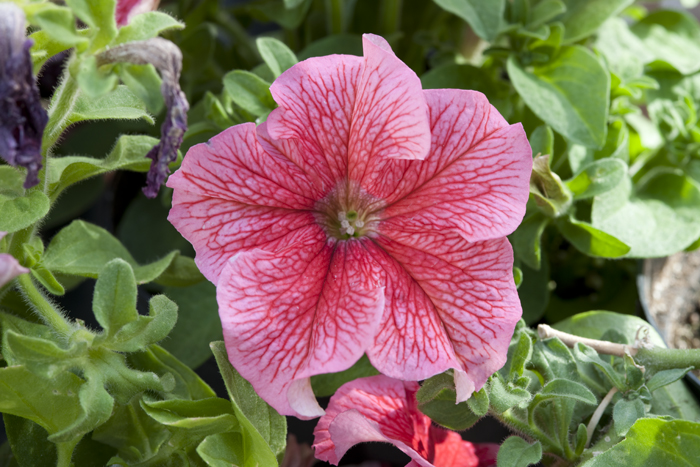
You may be familiar with George Gessert's hybrid irises and Steichen's delphiniums, but the latest large scale installation by Eduardo Kac is composed of a new transgenic organism that is partially petunia and partial Eduardo himself. He names this new part plant part animal organism the `Edunia' and it is part of a show opening April 17th at the Weisman Art Museum, Minneapolis. Take a look at the artist's website for more information.

Natural History of the Enigma
http://www.ekac.org/nat.hist.enig.html


Picture of the `Edunia' transgenic organism that is part of the Enigma work of Eduardo Kac, 2003-2008

Thursday, February 19, 2009

exist(ants)


exist(ants)
Antennae grown with genetic algorithms capture cosmic radiation echoing since the beginning of time, which is processed by a live ant colony, gathering and moving in patterns offering a tool in which the world's most populous insects extend human perception, reveal and then retell the story of all existence.


Genetically grown antennae capture signals from the cosmic microwave background, which began echoing in space since the Big Bang. The signals are processed by a computer system and translated into shapes of food, water, and pheromone trails in real-time. Ants gather and move according to these patterns, revealing the activity of the most abundant source of radiation energy ever known. From a distance, the sculpture appears to be a gigantic ant peeking into the human world. Upon closer examination, the human peeks into the ant world and is presented with patterns formed by the ant colonyʼs social mind.

Conceptual Trajectory
The uniting force behind our work is a mission to create emotionally engaging biological media. This has led to the focus on developing an aesthetic framework and a pattern language unique to biological art. In order to build and refine this, we create living interactive systems and then study the spectators of the installations. Our recent biological ambient media examined the use of bacteria in one case, and plants in another as simple vehicles for the encoding of information and an abstract form of telepresence. With exist(ants), insects present a big leap in the sophistication and complexity. Ants are surprisingly advanced with a highly developed social structure. In the exist(ants) project, the behaviors of a colony of insects extends human perception allowing the visualization of the cosmic microwave background. The installation explores the role of the author as a choreographer who prepares the stage and then leaves the actual creation of the moment-to-moment experiences to the performers.

Role of Technology
A genetic algorithm based on the antennae of the ant is used to
grow a highly tuned antennae to capture signals in the 0.3 GHz and 300 GHz range. These signals are then translated into shapes using a visualization algorithm and then “printed” in the ant habitat with the placement of food, water, and pheromones in real-time using bubble jet technology, thus influencing the gathering and movement of the ants.

Biological Media
exist(ants) raises
issues on various levels relating to the logic of natural processes. The notion of all existence as a delicate balance between chaos and order is a primary function of this installation. As time passes, the ant colony changes and refines its ability to process the cosmic signals that have echoed since the beginning of time.

Link to the conceptual video - Low Resolution Google Video
High Resolution Coming Soon

Video Credits:

Animation: Doros Polydorou
Concept, Writing and Directing: Tim Merritt